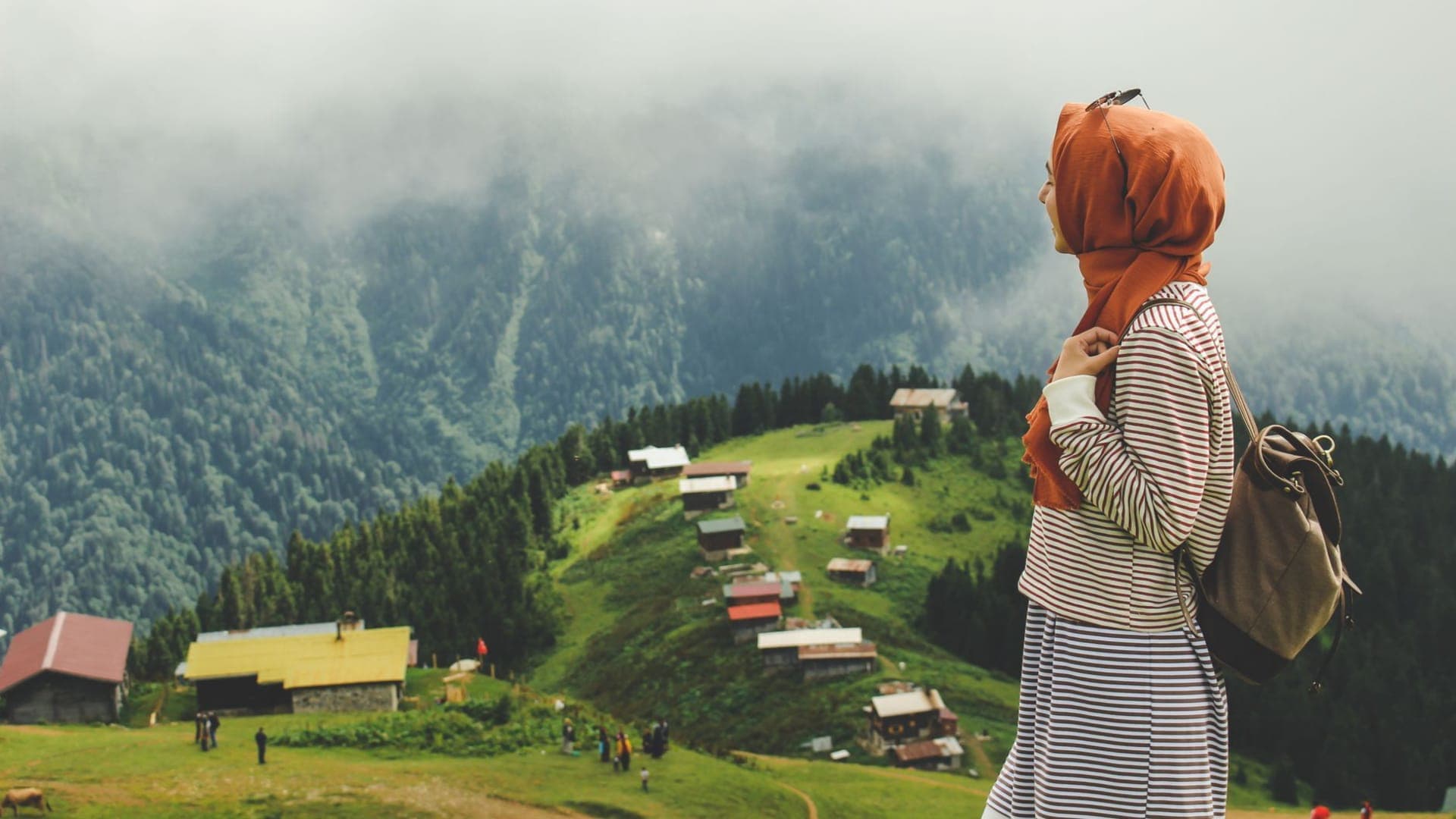
Imagine that very first moment you wake up in the morning and unzip your tent. The sharp scent of pine filling your lungs, the cool breeze brushing against your skin, and that thin, enchanting morning mist settling over the valley... Witnessing nature's awakening while your tea water slowly boils on the stove is one of the greatest rewards of camping. When you want to immortalize this exact moment—not just in your memory, but in a frame that will evoke the same feelings years later—that's where outdoor photography tips come into play. By applying these techniques in every corner of Turkey's camping routes, from the misty peaks of the Kaçkar Mountains to the mysterious canyons of the Taurus Mountains, you can transform your ordinary nature photos into breathtaking works of art.
If you've already mastered basic camping skills and pressing the shutter has evolved from merely capturing a memory into a true passion, you are in the right place. As an intermediate nature enthusiast, it's time to learn the intricacies of manually controlling your camera settings, using light to your advantage, and protecting your gear in harsh weather conditions. We invite you to see a whole new world while looking through the viewfinder in the heart of nature.
Why Should You Focus on Outdoor Photography?
Camping is an escape from the chaos of the city, the concrete jungles, and the endless chime of notifications. However, outdoor photography turns this escape into a practice of mindfulness. When you pick up your camera, you start looking at the world around you much more carefully. You notice the dance of the wind on the leaves, the reflection of a bug in the morning dew, or those mystical beams created by sunlight filtering through tree branches. This process compels you to forge a deeper connection with nature.
Outdoor photography tips don't just help you take better photos; they also teach you to be a good observer. Predicting how the weather will turn based on the direction of moving clouds, or planning where to pitch your tent according to the angle of the sunset, simultaneously improves both your camping and photography skills. When these two disciplines merge, every second you spend in nature becomes much more meaningful and unforgettable.
Reading the Light: The Magic of Golden and Blue Hours
The word photography literally translates to "writing with light," and in nature, light is your most powerful brush. The harsh, overhead midday sun that sharpens shadows and washes out colors is generally the most unproductive time for nature photographers. Instead, you should focus on the most magical moments of the day: the Golden Hour and the Blue Hour.
The Golden Hour, that brief window of time just after sunrise and right before sunset, adds a warm, soft, and golden glow to everything. The light falling on your tent during these hours turns your campsite into a veritable fairytale land. The Blue Hour, on the other hand, is the moment when the sun is just below the horizon, and the sky takes on a deep, dramatic navy blue tone. During this time frame, the warm yellow glow of the camping lantern inside your tent and the cool blue tone of the sky create a perfect color contrast. Capturing this juxtaposition is one of the most effective intermediate outdoor photography tips.
Composition Techniques: Capture the Moment You Step Out of the Tent
Seeing a beautiful landscape doesn't necessarily mean you'll take a beautiful landscape photo. When transferring the three-dimensional depth our eyes see onto a two-dimensional sensor, we need the rules of composition. Using a reference point is crucial to reflect the massive scale of nature in your photo. Your tent, a burning campfire, or your camping buddy looking out at the view are perfect scale markers that tell the viewer just how vast the space truly is.
Setting Up the Perfect Shot Step by Step
To guide the viewer's eye through the photo and make them feel like they are living that moment, you can follow these steps:
- Apply the Rule of Thirds in Nature: Mentally divide your frame into nine equal parts with two horizontal and two vertical lines. Place your tent or focal point at one of the intersections of these lines. Never put the horizon line dead center in the photo; if the sky is dramatic, align the horizon with the bottom line, and if the landscape is more interesting, align it with the top line.
- Use Natural Frames: Shooting outward through the open door of your tent gives the viewer an "I am there too" feeling. Two tree trunks, hanging leaves, or the walls of a canyon make fantastic natural frames surrounding your main subject.
- Discover Leading Lines: A winding forest trail, a flowing stream, or a fallen tree trunk... These lines draw the viewer's eye from the bottom corner of the photo straight toward your main subject (like a mountain peak in the background).
- Create Foreground Depth: When using a wide-angle lens, get your camera closer to the ground. Add three-dimensional depth to the photo by placing a sharply focused, colorful autumn leaf or a mossy stone in the foreground.
Gear Safety: Be Prepared for Nature's Surprises
As generous as nature can be, it can sometimes be equally ruthless. An unexpected Black Sea downpour or the fine dust storms of Central Anatolia can render thousands of dollars worth of gear useless in seconds. As an intermediate nature photographer, protecting your equipment is just as important as taking good photos. Condensation caused by temperature changes is your most insidious enemy. If you suddenly bring your camera into a warm tent after a cold night shoot, water droplets will form inside and outside the lens. To prevent this, you should place your camera in a ziplock bag and put it in your camera bag before entering the tent; this allows the temperature change to happen gradually.
Essential Protectors You Must Have in Your Bag
To protect your camera and lenses in tough camping conditions, never leave behind these items:
- Silica Gel Packets: Placing these small moisture-absorbing packets in every corner of your camera bag prevents fungus from growing on your lenses and keeps the electronics safe from moisture damage.
- Microfiber Cloth and Lens Pen: Always use a professional lens cleaner, not your clothing, to wipe away wind-blown dust or water spots left by the morning dew.
- Spare Batteries and a Cold Weather Strategy: Cold weather is the arch-enemy of batteries. To prevent your charge from draining rapidly, carry your spare batteries in your inner pockets close to your body, keeping them warm with your own body heat, rather than in your bag.
- Rain Cover or Protective Sleeve: Keep a dedicated rain cover for your camera, or at the very least, a thick trash bag and a rubber band, to guard against sudden downpours.
Night Camping and an Introduction to Astrophotography
Looking up at the sky in a pitch-black campsite miles away from city lights and seeing the Milky Way with the naked eye is a unique experience. Photographing this moment is perhaps the most technical of all outdoor photography tips. For this, you need a sturdy tripod and a complete mastery of your camera's manual mode.
The main goal in astrophotography is to let as much light as possible hit the sensor while preventing the stars from appearing as trails due to the Earth's rotation. Using a wide-angle lens (such as 14mm or 24mm), open your aperture to its widest setting (f/2.8 or f/4). Increase your ISO to between 1600 and 3200, depending on your camera's performance. Keep your shutter speed between 20 and 30 seconds. Don't forget to use a 2-second timer to avoid shaking the camera when pressing the shutter. When you capture that shot with your softly illuminated tent in the foreground and millions of stars in the background, you'll feel that every sleepless second was worth it.
Crucial Safety Reminders
When looking through the viewfinder, it feels as if the world consists only of that rectangular frame. However, in nature, this poses serious risks. You might not realize you've backed up to the edge of a cliff while trying to find the perfect angle, or that you've wandered right into the middle of wildlife while your attention was entirely on the camera. No photograph is worth more than your safety.
Furthermore, respecting nature should be a photographer's most fundamental rule. Do not damage the vegetation to get a better frame, do not startle wild animals with a flash, and do not get too close to their nests. Remember that we are guests in nature, and we should leave nothing behind but our footprints.
Camping and photography are two great passions that complement each other perfectly. As you put these techniques into practice, you will find your own style and blend the unique moments nature offers with your own vision. On your next camping trip, before you press the shutter, remember to listen to the sound of the wind, enjoy the moment, and be truly present in it—not just behind the viewfinder. Now pack your bag, sling your camera over your shoulder, and boldly step into nature to capture that perfect shot!