
12 Mar 2026
Pedal to the Heart of Nature: A Guide to Cycling While Camping
A comprehensive guide to routes, gear, and safety for campers looking to explore nature on a bike after pitching their tent.
5 min read
11 views
Kampçı Editör Ekibi
Outdoor Writer @ Kampçı
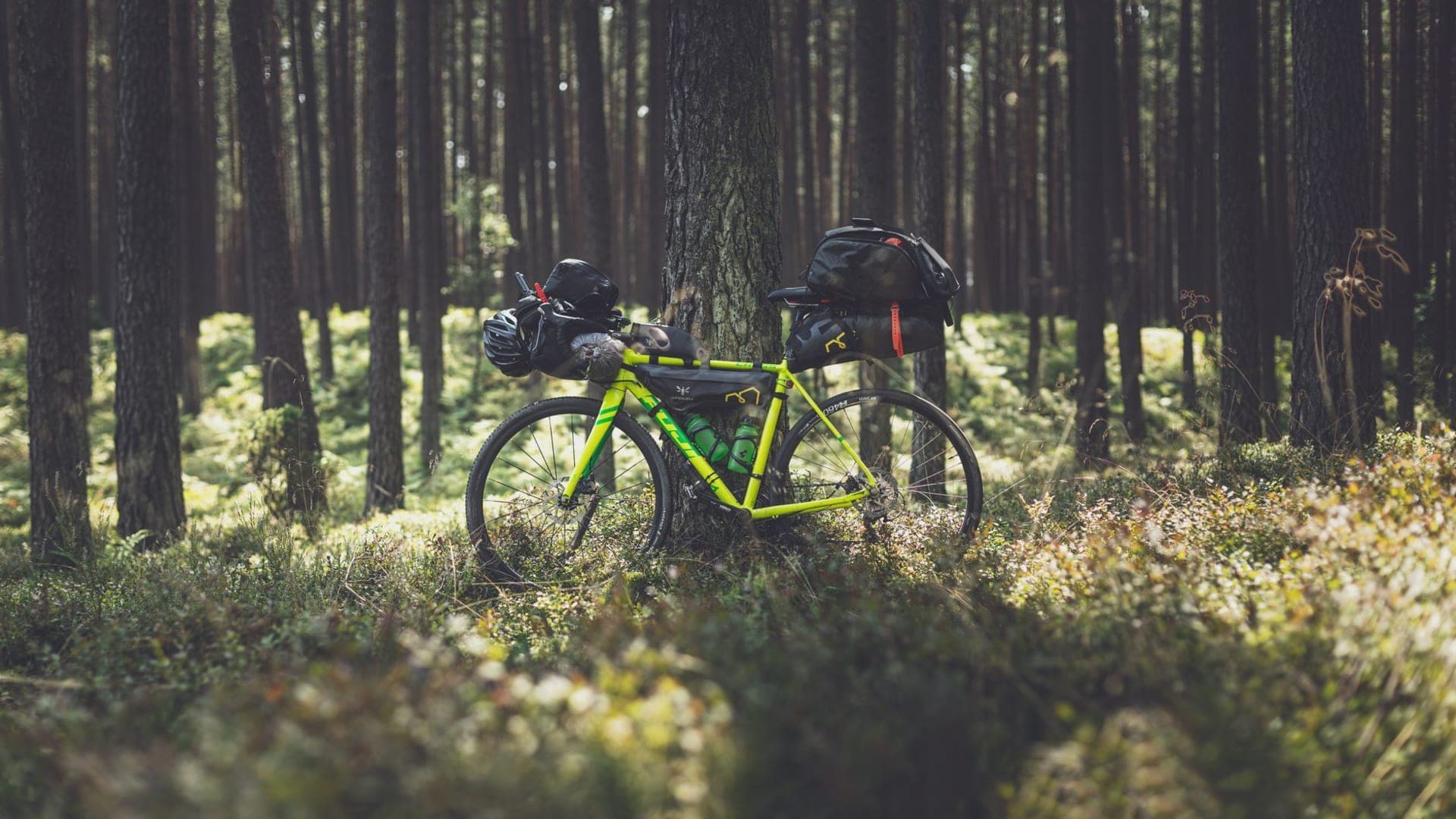
Are you ready to leave behind the flat coastal roads of the Aegean and the hot asphalt of the Mediterranean, and turn your pedals toward a wilder, steeper, and greener landscape? As an intermediate bikepacker, you no longer just want to cover distances; you crave an isolated camping experience in the heart of nature. This is exactly where your quest for Turkey's best bikepacking routes will inevitably lead you to the misty mountains of the Black Sea. With its gradients that test your physical endurance and its unique highland culture, the Black Sea is the ultimate playground that takes bicycle camping to the next level.
For many touring cyclists, riding in Turkey means following the coastline. However, the moment you turn inland and head south in the Black Sea region, the rules completely change. The region's topography is shaped by steep mountain ranges that abruptly rise from sea level to 2,000 meters. This reality will turn your daily mileage goals upside down. Aiming for an average daily distance of 45-60 km and 1,200 meters of elevation gain is the most ideal planning for an intermediate bikepacker in the Black Sea terrain. Anything more risks severe muscle fatigue and arriving at your campsite in the dark with a heavily loaded bike.
While you can ride for days in a t-shirt and shorts along the Aegean coast, you will experience all four seasons in a single day in the Black Sea highlands. The most defining feature of Black Sea routes is the variability of the terrain. Mud, unpaved dirt roads, chunky gravel, and broken asphalt await you at different kilometers of the same route. Therefore, this is an arena designed not for skinny-tired touring bikes, but for gravel bikes or hardtail mountain bikes.
The following routes are intermediate trails that require solid navigation skills and where logistical planning is crucial, yet they offer spectacular natural landscapes.
With its karstic structure, deep canyons, and untouched forests, the Küre Mountains are one of Turkey's wildest regions. Starting from Pınarbaşı and descending to Bartın via Valla Canyon and Ilıca Waterfall, this route offers a rigorous 120-kilometer ride through the forest. The biggest challenge of this route is that the forest roads become severely muddy after rainfall. Camping spots are usually at canyon entrances or forest clearings. Logistically, although the distance between villages is relatively short, finding fresh food in local grocery stores can be difficult.
Starting from Borçka, passing Karagöl, and descending into Macahel—Turkey's only biosphere reserve—this route will test your climbing endurance to the limit. Climbing gradients on Black Sea routes can occasionally reach 15% to 20%; this makes having large cogs on your rear cassette, such as at least a 42T or 50T, absolutely mandatory. When camping on the Macahel route, you will experience significant condensation inside your tent due to the high humidity. Setting up a double-wall tent with open ventilation windows is vital.
This route is a visual feast that starts at sea level and stretches up to plateaus at an altitude of 2,000 meters, where the forest canopy gives way to endless meadows. The transition from Çambaşı to Perşembe Plateau (the region with the meanders) is done over dirt and unpaved roads. Since the tree cover decreases in this area, you will have to battle wind resistance. While the edges of the meanders look wonderful for camping, you must be careful of plummeting nighttime temperatures. On the high-altitude highland roads of the Black Sea, temperatures can drop to between 5°C and 8°C at night, even in the summer months.
A successful camping experience in the Black Sea is possible not just with physical strength, but with the right strategy. Here is some practical knowledge that will save your life in the field:
Here are common mistakes that even intermediate campers frequently make, which can turn a tour into a nightmare:
The wildlife in the Black Sea is quite active. Brown bears, wild boars, and wolves are common, especially in the Küre Mountains and the rural areas of Artvin. Your biggest safety risk while bikepacking is food odors lingering on your tent. Cook and eat your dinner at least 50 meters away from your campsite. Place all food, trash, and scented items (including toothpaste) in airtight bags and hang them from a high branch of a tree away from your tent.
Another important safety issue is shepherd dogs. The Black Sea highlands are home to massive dogs that protect livestock. Trying to speed past them on your bike (fleeing) triggers their hunting instincts. When you see dogs approaching and barking, dismount, use your bike as a barrier between yourself and the dog, and walk away calmly without making eye contact.
The safest and most stable weather conditions for Black Sea routes are between late June and early September. In spring, the roads are excessively muddy due to melting snow, and by mid-autumn, there is a high risk of sudden snowfall at high altitudes.
Due to the heavily graveled and muddy surfaces, knobby tires of at least 40c (preferably 45c) should be used on gravel bikes, and cross-country (XC) tires of 2.1 inches or wider on mountain bikes. A tubeless setup is highly recommended to reduce the risk of flats.
The most basic rule is to isolate odors. Cook your food at least 50 meters away from the tent, do not let smells linger on your clothes, and keep all food items away from the campsite at night by hanging them on a tree branch (bear hang technique).
The Black Sea is Turkey's richest region in terms of water sources; you can find a stream or fountain every few kilometers. However, since the water can be contaminated due to livestock, it is sufficient to always carry a water filter and 1.5-2 liters of water for active riding.
To withstand the relentless downpours of the Black Sea, your tent fly should have a water column resistance of at least 3000 mm, and the floor fabric at least 5000 mm. You must also ensure that the seams are taped from the inside.
On the list of Turkey's best bikepacking routes, the Black Sea is undoubtedly the region that demands the most effort but rewards you the most generously. You might question yourself while your legs burn on those steep ramps, while cleaning mud off your bike, or while trying to find your way through dense fog. But when you rise above the sea of clouds and unzip your tent to that endless greenery, you will see that all the hardships you endured were worth it. Step out of the comfort zone of the Aegean, update your bike's brakes and gear ratios for the unforgiving gradients of the Black Sea. Pack your gear into waterproof bags and turn your route north to feel nature at its wildest on two wheels. Remember, real camping begins where the asphalt ends!
Related guides and stories from the outdoor world
A comprehensive guide to routes, gear, and safety for campers looking to explore nature on a bike after pitching their tent.

A comprehensive trail running guide that will take your camping experience to the next level and let you run free on breathtaking trails.

Ways to balance lightweight travel and camp comfort while pedaling long distances.

A comprehensive bikepacking guide packed with gear, safety, and route tips for intermediate campers looking to pedal into the heart of nature.