Summary: The
Mediterranean coastline is Turkey's most popular camping destination, featuring high humidity, rich Lycian history, and unique coves. Mediterranean campsites along Olympos, Adrasan, and Çıralı offer a comfortable year-round outdoor experience when paired with proper tent ventilation, high-UV tarps, and moisture-proof sleeping pads. This guide covers every critical aspect of beach camping, from local logistics to gear selection.
What You Will Learn from This Article
- An analysis of the safest and most scenic campsites along the Mediterranean coast.
- Technical solutions to combat rising night humidity during beach camping.
- How to choose a campsite in Olympos, Adrasan, and Çıralı based on budget and comfort preferences.
- Methods for pitching tents and ensuring wind resistance on sandy and pebbly terrain.
- Local water sources, campfire regulations, and municipal rules.
Mediterranean Campsites and the Dynamics of Coastal Camping
Turkey's southern coastline is a unique haven for nature lovers looking to wake up to the sound of crashing waves and step directly out of their tents into turquoise waters. Mediterranean campsites offer far more than an ordinary tent vacation, boasting high-oxygen forest environments where the steep slopes of the Beydağları Mountains meet the sea, alongside rich historical remains from antiquity. However, enjoying a hassle-free camping trip in this region requires analyzing key climate factors like high humidity, night-and-day temperature swings, and coastal winds.
What Is Coastal Camping in the Mediterranean and Why Choose It?
Coastal camping is a temporary setup pitched at sea level, usually on sandy beaches, pebbles, or pine forest floors right along the shore. Thanks to roughly 300 sunny days a year and rich flora, the Mediterranean coast creates an ideal backdrop for outdoor living. More than 150,000 nature lovers stay at coastal campsites along the Lycian Way each year. The main reason for this overwhelming popularity is the access to secluded coves and an atmosphere that offers total relief from city stress.
Compared to the Aegean and Marmara coasts, the Mediterranean features higher salinity and warmer water temperatures that linger much longer. This allows for comfortable tent camping even into the autumn and spring months. Shielded coves acting as natural harbors provide calm, wind-protected waters, creating perfect conditions for combining kayak trips with camping.
Why Are Mediterranean Camping Routes Essential for Outdoor Enthusiasts?
The defining feature of the Mediterranean coastline is its geographic variety. You can step out of your tent in the morning for a swim in crystal-clear waters and, after just a 20-minute hike in the afternoon, trek along ancient Lycian trails. Microclimates across the region draw cool breezes through deep valleys while keeping the shoreline warm and inviting.
On a practical level, the varying degrees of facility development cater to both campers seeking organized infrastructure and wild camping enthusiasts who want to be fully self-sufficient. Fully equipped organized campgrounds with electricity, showers, and water sit side-by-side with untouched coves accessible only by foot.
Olympos Campsites: Where History Meets Nature
Olympos is an iconic Mediterranean destination known for its ancient ruins nestled inside a deep valley and a shore where those ruins open up to the sea. The most crucial rule here is understanding the boundary between protected archaeological sites and private campgrounds where staying overnight is allowed. Pitching tents inside the ancient ruins or directly on the beach is strictly forbidden; thus, accommodation takes place within designated campgrounds deeper inside the valley.
Real Field Experience: Nighttime temperatures in the Olympos valley feel 3–4°C cooler than on the beach. While the valley's steep cliffs block daytime sun, cool air descending from the mountains at night causes heavy condensation. When pitching your tent, always pull your rainfly taut and ensure your sleeping pad is made of moisture-proof closed-cell foam.
When camping in Olympos, you reach the cool Mediterranean sea by walking alongside a stream flowing through the ancient ruins. This shaded walking path blends history with nature. Facilities here typically include restrooms, showers, and shared kitchen areas.
Internal Link Suggestion: For trekking details in the area, check out our 'Lycian Way Hiking and Camping Preparation Guide'.
Adrasan Coastal Camping Routes: Serenity and Crystal-Clear Seas
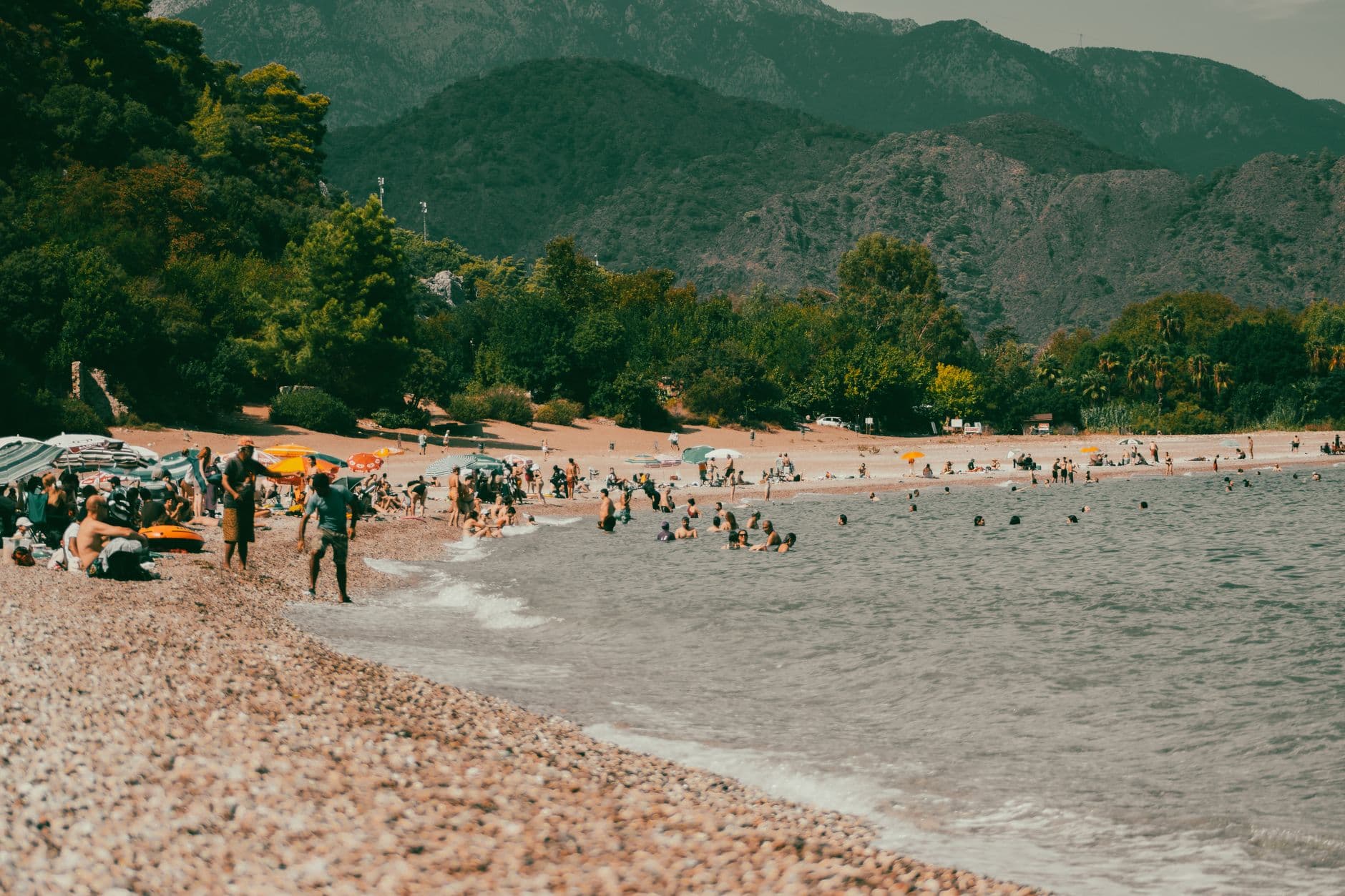
Located about a 20-minute drive from Olympos, Adrasan is the top choice for travelers seeking a quieter camping trip, thanks to its wide 2-kilometer sandy beach and sheltered bay structure. Flanked by high mountains on both sides, Adrasan Bay features shallow, calm waters free of heavy waves.
Campsites along the Adrasan shore are situated right on the beach or nestled under eucalyptus and pine trees just behind the coastal road. The beach consists of fine sand mixed with small pebbles, requiring extra precautions when pitching a tent.
Real Field Experience: Standard tent pegs will not hold in the loose sand near the shore in Adrasan. Strong afternoon thermal winds blowing from sea to land can knock over poorly secured tents. Use specialized sand stakes or anchor your guy lines around large rocks. Additionally, keep the windward profile of your tent low.
Adrasan also serves as the departure point for daily boat tours heading to surrounding coves. It makes a great logistical hub for day trips to roadless gems like Porto Ceneviz (Genoese Cove), Sazak Bay, and Suluada Island.
Internal Link Suggestion: To boost wind stability at coastal camps, read our 'Tent Anchoring and Peg Selection Guide'.
Çıralı and Maden Bay: Pristine Mediterranean Shores
Although Çıralı shares the same bay with Olympos, it offers a completely different vibe. As a nesting ground for Loggerhead Sea Turtles (Caretta Carettas), Çıralı beach is subject to strict environmental protections. Instead of massive concrete structures, eco-campsites sit tucked away among orange groves along the coastline.
Heading north from Çıralı brings you to Maden (Atbükü) Bay, a secluded haven accessible only via rough terrain where you can truly immerse yourself in nature. Set around an abandoned mine, this bay offers an isolated wild camping experience with limited cell service and no electricity.
Real Field Experience: The dirt road to Maden Bay requires a high-clearance vehicle or 4x4; standard passenger cars risk damaging their undercarriage. Fresh water is limited to a single spigot in the bay. If you plan to camp at Maden Bay, pack at least 4 liters of fresh water per person per day and bring heavy-duty trash bags to pack out all your waste.
Internal Link Suggestion: Learn about off-grid water treatment in our article 'Methods for Purification and Clean Water in the Wild'.
Camping Gear and Moisture Management in Mediterranean Heat
The biggest mistake campers make in a Mediterranean climate is focusing solely on daytime heat while ignoring humidity. Nighttime humidity along the Mediterranean coastline can reach up to 80% in the summer. Combined with trapped ambient heat, this high moisture creates a muggy atmosphere inside the tent and leaves gear damp by morning.
Key gear strategies for successful beach camping include:
- Double-Walled and Dual-Door Tents: Choose tents with a full-mesh inner tent. Dual doors allow a continuous cross-breeze to pass through the interior. In double-walled tents with proper ventilation, internal temperatures can feel noticeably cooler by 4–5°C.
- Using a Tarp (Sunshade): Summer UV levels in the Mediterranean are extremely high. A silver-coated, UV-protective tarp is essential to shield tent fabric from sun damage and create a shaded living area outside.
- Sheets or Synthetic Blankets Instead of Sleeping Bags: Thick down sleeping bags are impractical during hot summer nights. Opt for moisture-wicking synthetic sleeping bag liners or lightweight cotton sheets instead.
- Inflatable or High-R-Value Sleeping Pads: Ground surfaces can chill and draw moisture overnight. Aluminum-backed or air-insulated sleeping pads prevent direct contact with ground dampness.
Internal Link Suggestion: Explore recommended gear for warm-weather trips in our 'Summer Camping Gear Recommendation List'.
Logistics and Transportation: Getting to Coastal Campsites
Reaching Mediterranean beach campsites is straightforward via local minibuses (dolmuş) departing from central Antalya or by private vehicle. Buses heading toward Kumluca/Kaş from Antalya Airport or the main bus terminal drop off passengers at the main turnoffs for Olympos or Çıralı, where local shuttle buses run down the valleys regularly.
Campers driving their own vehicles should exercise caution on narrow, winding mountain roads. To avoid heavy summer traffic along the highway, plan to travel early in the morning. If storing perishable food in your vehicle, bring a 12V portable car fridge or a high-insulation passive cooler (such as polyurethane-insulated models) to prevent food spoilage.
Mediterranean Campsites Comparison Table
The table below compares key features of popular coastal camping spots across the region:
| Camping Region | Ground Type | Facilities | Shade Availability | Accessibility | Ideal Season |
|---|
| Olympos Valley | Dirt / Pebble | Full (WC, Shower, Kitchen) | High (Dense Trees) | Easy (Paved + Shuttle) | May - October |
| Adrasan Beach | Sand / Fine Pebble | Moderate to Full | Moderate (Eucalyptus / Tarp) | Easy (Direct Drive-in) | April - November |
| Çıralı Beach | Fine Pebble | Full (Eco-Campsites) | High (Orchards) | Easy (Paved Road) | April - November |
| Maden Bay | Rocky / Sandy Beach | None (Pristine Cove) | Low (Sparse Trees) | Difficult (4x4 / Hike) | May - September |
Frequently Asked Questions
Is wild/free camping illegal in Mediterranean campsite areas?
Pitching an unauthorized tent inside national park boundaries, archaeological sites, and protected shorelines (such as Çıralı beach or inside the Olympos Ancient City) is illegal and subject to fines. However, you can safely camp in untouched areas like Maden Bay or within private, designated campgrounds.
When is the best time to camp in Olympos and Adrasan?
July and August can be uncomfortable due to extreme heat and high humidity. The ideal times to camp are May–June or September–October, when temperatures are pleasant and crowds are smaller.
Detailed Guide →
How can you prevent humidity inside the tent during beach camping?
Tent ventilation vents should be left fully open all night. Keep the inner mesh doors zipped while leaving outer rainfly flaps slightly unzipped for airflow, and never dry wet clothes inside the tent.
Are campfires allowed in local camping areas?
The Mediterranean has one of the highest wildfire risks. Open campfires are strictly forbidden throughout almost all outdoor areas and organized campsites during the summer season. Use high-safety canister camp stoves for cooking instead.
Are mosquitoes and insects a problem at Adrasan and Olympos campsites?
Mosquitoes can be prevalent near water bodies and inside humid valleys, especially in the evening. Natural bug sprays with high efficacy, mesh-lined tents, and herbal incense burned near the tent entrance offer effective protection.
Conclusion and Starting Your Mediterranean Adventure
Mediterranean campsites offer a rich journey where blue meets green—a must-experience destination for every outdoor enthusiast. From the historical atmosphere of Olympos to the tranquil waters of Adrasan, and from the natural charm of Çıralı to the isolated feel of Maden Bay, each spot caters to different preferences. With proper timing, climate-appropriate technical gear, and eco-conscious camping habits, every moment spent on the Mediterranean coast turns into an unforgettable outdoor adventure. Check your gear, map your route, and enjoy your camp while listening to the sounds of nature.