Summary: Essential mountaineering training for experienced nature enthusiasts looking to transition from camping to mountaineering covers adaptation to high-altitude conditions, the use of technical gear (crampons, ice axes, rope systems), and winter mountaineering principles. For safe climbing in Turkey, it is vital to fully complete summer and winter modules, navigation, and first aid training through licensed clubs in accordance with the Turkish Mountaineering Federation (TDF) curriculum.
From Camping to Altitude: Why is Essential Mountaineering Training a Must?
You've been spending time in nature for a long time. You can pitch your tent in minutes even in the windiest weather, you know the principles of layering by heart, and you can cook efficient meals on your camp stove. However, ascending to altitudes above 3,000 meters—where the tree line ends, oxygen decreases, and the incline steepens—requires a completely new discipline far beyond regular camping. Essential mountaineering training is the bridge that combines your wilderness survival skills with the fight against gravity and technical safety systems.
What You Will Learn in This Article
- Summer and winter training modules required for transitioning to mountaineering
- Rope knots, belay systems, and technical gear dynamics
- The sharp differences between high-altitude camping and standard nature camping
- Preparation processes for popular mountaineering routes in Turkey (Aladağlar, Erciyes)
- Common fatal mistakes made during summit climbs and how to avoid them
Mountaineering is not just an adventure sport; it is a science with strict rules. According to data from the Turkish Mountaineering Federation, 65% of mountain accidents occur during summit attempts made without adequate technical training and proper belay systems. Therefore, rather than relying solely on your camping experience for a direct summit attempt, going through a solid foundational training process is an absolute necessity.
Stages of the Mountaineering Training Curriculum Under TDF Standards
In Turkey, mountaineering training is generally provided through a standard curriculum set by the Turkish Mountaineering Federation (TDF) or university clubs. This process is not a weekend course, but a discipline spanning across seasons.
1. Basic Summer Mountaineering Training
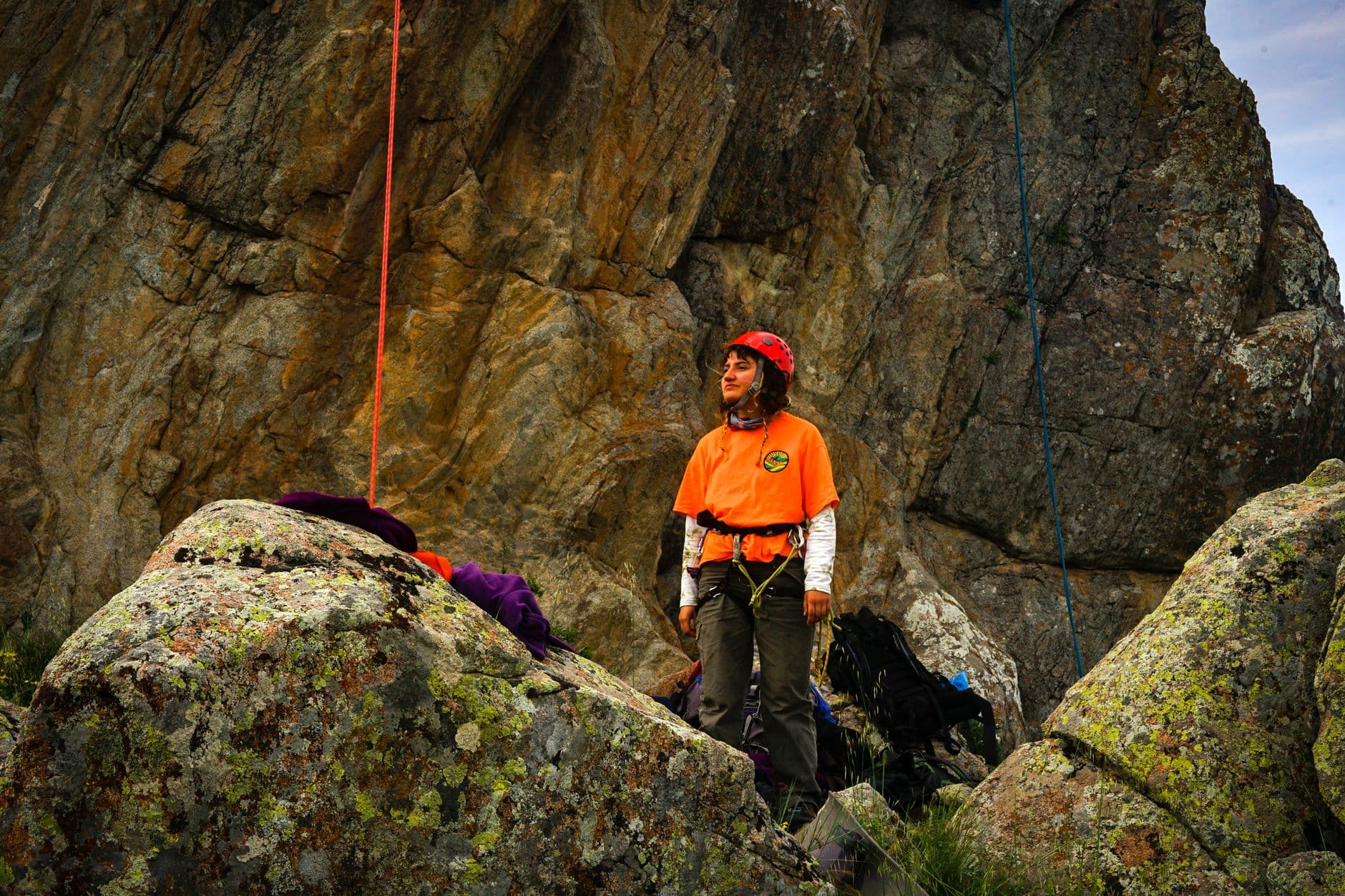
This stage is where your existing camping skills are adapted into a "mountaineering" format. The logic of packing a backpack changes; the center of gravity is adjusted for climbing. Walking techniques (scree, grassy slopes, boulder fields) are detailed. Most importantly, technical gear (helmet, harness, carabiner) is introduced, and basic knots (figure-eight, clove hitch, munter hitch, prusik) are taught. Mountain communication commands and leadership hierarchy are established during this phase.
2. Advanced Summer Mountaineering and Rope Techniques
Simple rock climbing moves, ascending a fixed line with a prusik, free descent (abseiling/rappelling), and belaying techniques are practiced. The mechanics of arresting a partner's fall and the logic of building anchors form the core of this training. Even if you are an experienced camper, the responsibility of protecting a life at the end of a rope requires entirely new muscle memory.
3. Basic Winter Mountaineering Training
In winter, the mountain is a completely different planet compared to summer. While traditional three-season tents can withstand wind resistance in forested areas, geodesic winter tents and snow wall systems directly increase survival chances by maintaining 90% of their form even in alpine winds reaching 100 km/h. This training teaches the use of ice axes and crampons, self-arresting in snow, avalanche awareness, snow profile analysis, and building snow caves (igloos/snow shelters).
Vital Practical Tips for High-Altitude Climbs
When applying your theoretical training in the field, certain micro-techniques that experienced mountaineers have learned the hard way over the years can save lives. You should pay attention to the following points in high-altitude camping and climbing:
- Use the Rest Step (French Step): On steep inclines, fully lock your leg with each step to transfer your body weight from your muscles to your skeletal system. This technique delays lactic acid buildup, allowing you to climb for hours.
- Adjust Water Management According to Altitude: To prevent your water from freezing during winter climbs, place your flask among your clothes or in the center of your backpack, rather than on the outside. Carrying the flask upside down prevents freezing from locking the cap.
- Active Climbing Layering: You can wear your thick down jacket at the campsite, but you should feel slightly chilly when you start climbing. Your body heat will rise with exertion, causing you to sweat; sweating is the first step to freezing at high altitudes. Start moving with just a breathable softshell and a base layer.
- Carb-Focused Nutrition: Above 3,000 meters, the digestive system slows down. Instead of fatty and protein-heavy camp meals, opt for carbohydrates (dried fruits, gels, oats) that quickly convert to energy and digest with less oxygen.
- Lace Tension Adjustment: During the ascent, leave the ankle section of your boots relatively loose to allow mobility. On the descent, tie the ankle section very tightly to prevent your heel from sliding forward and causing toe bang.
Common Mistakes in Altitude Climbs and Training Processes
Bringing camping habits to the mountain is the biggest handicap for beginner mountaineers. Here are the critical mistakes that need to be corrected:
- Bringing Camp Luxuries to the Mountain: Carrying a cast-iron skillet or a camp chair might be tolerable in a forest camp. However, in mountaineering, the rule "Light is fast, fast is safe" applies. Every extra gram in your backpack feels like a kilogram at altitude. Carry only functional and essential gear.
- Summit Fever: Failing to adhere to the designated turnaround time is the most fatal mistake. Even if you are very close to the summit, if it's 1:00 PM and the weather is deteriorating, you must turn back. The summit is only the first half of the climb; the real success is returning to camp safely.
- Poor Walking Form with Crampons: The most common mistake in winter training is keeping the legs too close together while wearing crampons. This causes the crampon points to snag on your gaiters or your other leg, leading to fatal falls (especially on ridge lines). You should take your steps shoulder-width apart and in a "V" shape.
Advanced Safety Protocols in the Practice of Aladağlar and Kaçkarlar
Turkey's mountains have their own distinct characteristics. For instance, the Niğde Aladağlar range is structurally predominantly limestone and carries a serious risk of rockfall. When climbing scree couloirs in Aladağlar (such as the Karayalak Valley), wearing a helmet is not optional; it is mandatory. Keeping close distance between team members is critical to stop a falling rock before it has a chance to gain momentum.
The Kaçkarlar, the pearl of the Black Sea region, are known for sudden fog and micro-climate effects. Even if you start a climb in clear weather in the Kaçkarlar, visibility can drop to 2 meters within minutes. Therefore, using a GPS device, having map-and-compass knowledge, and marking the route with cairns (stone piles) form the foundation of safety when climbing in the Kaçkarlar.
3 Critical Facts You Should Never Forget About the Mountaineering Discipline
- Fitness Alone is Insufficient: No matter how good a runner or hiker you are, without technical knowledge (rope use, fall arrest) in mountaineering, fitness only gets you to the accident site faster. Technical training is the steering wheel of physical strength.
- The Leader's Decision is Indisputable: Mountaineering is not a democratic sport. If the team leader deems the weather or the team's overall condition risky and decides to "turn back," this decision is not questioned on the mountain. In mountaineering, ego is the most dangerous burden.
- Training Requires Continuity: Finishing basic training and getting a certificate doesn't make you a mountaineer. Rope knots and rescue pulleys (like the Z-drag) are forgotten if not used. Pre-season club reviews and practices are mandatory.
Frequently Asked Questions
How long does basic mountaineering training take?
According to the Turkish Mountaineering Federation (TDF) curriculum, the summer and winter modules, along with theoretical lessons and weekend camp practices, span a total of 1.5 to 2 years. This duration may vary depending on the internal programs of the clubs.
I am an experienced camper, can I start winter mountaineering training directly?
No, you cannot transition to the winter module without completing the basic summer mountaineering training and the rope techniques module. The anchor building and belay systems learned in summer are the foundational ground upon which winter mountaineering is built.
Which institutions should I choose for mountaineering training?
Registered and licensed sports clubs affiliated with the Turkish Mountaineering Federation or university mountaineering clubs (such as DÜDAK, İTÜDAK, etc.) are the most reliable institutions that provide official training in accordance with standards.
Is there an age limit for taking basic mountaineering training?
Generally, you must be at least 18 years old for licensed training. However, many sports clubs have youth teams, and with parental consent, basic training can begin from the age of 14-15.
Which rope knots are mandatory to learn in basic training?
The overhand knot, figure-eight, open and closed figure-eight, clove hitch, munter hitch (HMS), reef knot (square knot), bowline, and prusik knots are the standard knots taught first in basic training and are of vital importance on the mountain.
Conclusion: Safe Steps to the Summits with Proper Training
Camping is the most beautiful way to understand nature and live in harmony with it. Mountaineering takes this harmony to the next level by pushing your physical and mental limits. Taking essential mountaineering training is not just about reaching a summit; it is the most important step you will take to return safely from that summit to your loved ones. You can only learn to respect the mountain, know your limits, and play by nature's rules through a proper training process. Now, contact a licensed mountaineering club in your area and take the first step to expand your camping experience toward the sky. The mountains will always be there, as long as you go with the right preparation.